
Youth Blog
When the pain isn't 'normal': Why it's crucial to advocate for your health
By Wednesday Pope, Member of RHEP Youth Advisory Board
May 15, 2026
Member of RHEP Youth Advisory Board details her experience with endometriosis and navigating a healthcare system that isn’t always helpful
[Editor’s Note: May is recognized annually throughout the U.S. as National Foster Care Month. Wednesday Pope is a former foster youth and current youth advocate, peer educator, and Youth Advisory Board Member of the Reproductive Health Equity Project for Foster Youth (RHEP). In the following piece, Wednesday writes about her experience with endometriosis in an effort to help other young people better advocate for their health.]
I’ve struggled with endometriosis since I got my first period at 13 years old, but it took me seven years to get a doctor to believe me about my pain.
It’s been a long and sometimes painful journey since then, but I’m grateful I was able to take action and get care when I did. I’m sharing my story now with the hope of inspiring other young people to prioritize and advocate for their health, particularly if they’re experiencing symptoms they’re struggling to pin down. Endo, as the condition is often called, isn’t the most well-known or well-studied disease. I urge anyone to do more research and/or seek care from an OBGYN specializing in endometriosis if any of my story sounds like something you or a loved one has gone through.
What is happening?
In my early teens, I had really irregular periods. Sometimes they would be super heavy, and other times I would have a super short one-day period with almost no bleeding. The only consistent thing about my menstrual cycle was the pain. I would get severe pain before my period, during, and sometimes randomly later in my cycle. I had really painful bowel movements, and I would get really intense bloating and fatigue randomly throughout the month.
I refer to my symptoms in the past tense because I currently have my endo under control, thanks to birth control, lifestyle changes, and having recently undergone surgery to remove lesions. I’m projected to need surgery every 3-5 years for the rest of my life to manage this disabling condition.
I know that might sound a bit dramatic, but let me explain.
Endometriosis is a debilitating condition when it’s not managed, and there is no cure. I would be kept up at night or even woken up in the middle of the night from pain. Birth control, Midol, and Advil are usually a first-line treatment, but even the maximum daily dose of pain meds doesn’t always help. Sometimes the pain was less, and other times more. It was always distracting and sometimes incapacitating. Often, I would stay in bed all day and practice self-care, like exercising, heating pads on the belly, baths, and anything else I could try to manage the pain.
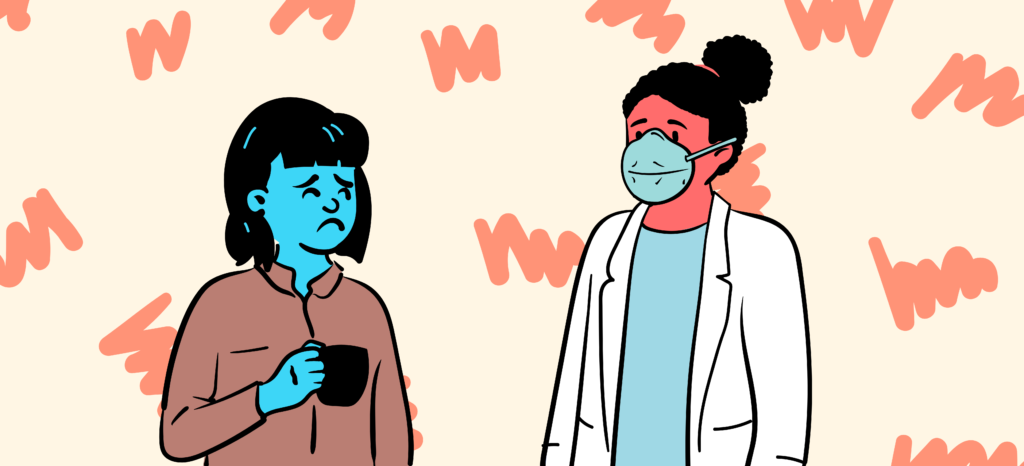
I was told by adults and doctors that all of this was normal and that everyone has “painful periods,” bloating, and fatigue. I even had dismissive doctors tell me that “young people don’t get endometriosis” and that it was so rare that I shouldn’t be worried about it. After many years of research and seeing several endometriosis specialists, I now know that severe pain and discomfort like what I experienced is not at all normal. Really, the clinical data is skewed.
Most people discover endometriosis during fertility treatment, as endo can cause infertility. Because of that, usually older people with more progressed endo are the ones getting diagnosed. This is because endo can only be diagnosed by surgery. It’s sometimes visible on imaging like ultrasounds or CT/MRI scans, but those aren’t reliable diagnostic tools. A biopsy is needed to test the tissue.
Forging ahead
Despite the medical gaslighting and misinformation being told to me, I kept pushing. At 20 years old, I found an OBGYN who believed me, and I got my first surgery for endometriosis. I had many endometriosis lesions and some polyps, which are possibly precancerous growths, inside my uterus. After that surgery, all of my endometriosis symptoms halted for eight months. My periods, which previously were excruciating, were suddenly completely painless and light. I finally had a taste of relief, but more than that, I was emboldened and empowered by my perseverance through the dismissal of doctors.
It turns out, I wasn’t crazy or being dramatic about my pain; I was living with a chronic condition that hasn’t been properly studied, and as a result, there is no known cure and a trove of misinformation in the medical community.
Luckily, the surgery is non-invasive and leaves almost no scarring. I was almost fully recovered and back to work in four days, but my doctor offered me a note for a week off. After a slow return of my symptoms, I had another short surgery, and my symptoms are once again manageable.
If you feel like this resonates with you or someone you know, I encourage you to read up on recent breakthroughs in endometriosis research and then go to an OBGYN to discuss your concerns. If you don’t feel validated by a doctor, you have the right to switch providers or get a second opinion. I had to switch doctors five times before I found someone who believed me. While I hope things have improved in the past 10 years, be prepared to fight for your medical needs.
You deserve better than dismissal. You deserve relief and peace.
Wednesday Pope is a member of the Reproductive Health Equity Project for Foster Youth (RHEP) Youth Advisory Board.
Subscribe to our newsletter
We take your privacy seriously, and will not share your information with third parties. Your zip code helps us better understand what communities we are reaching.
